


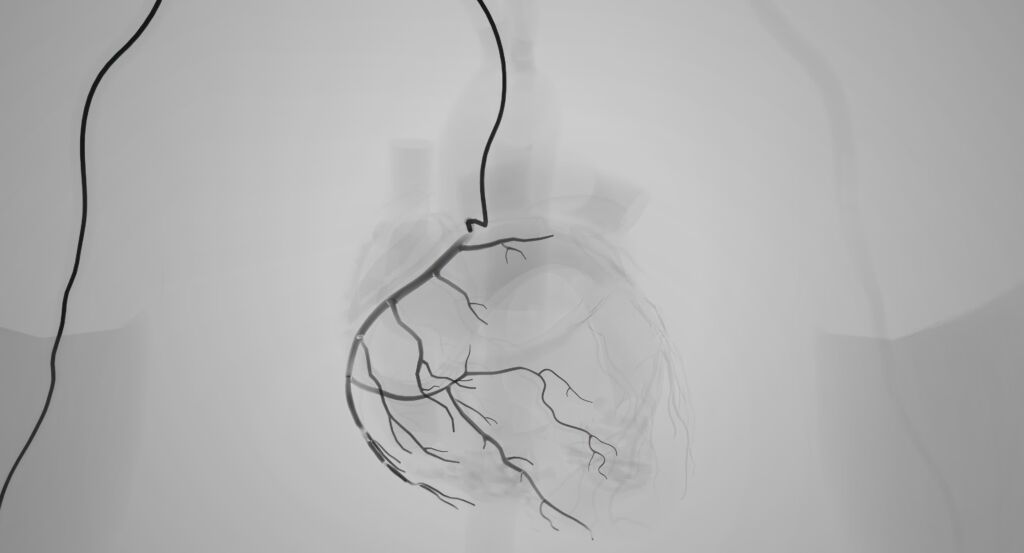
Coronary Angiography: The most accurate imaging of the Heart
Coronary angiography (diagnostic catheterization) is internationally recognized as the gold standard examination for evaluating cardiac function. It allows the interventional cardiologist to visualize the anatomy of the coronary vessels with complete precision and identify any stenoses or occlusions affecting myocardial perfusion.
Which patients is it recommended for?
Coronary artery evaluation is indicated when findings require further investigation. It is typically performed in cases such as:
- Positive stress test: Following an abnormal exercise test, stress echocardiogram, or myocardial perfusion scan
- Suspicious symptoms: Such as angina or dyspnea in patients with cardiovascular risk factors
- Acute myocardial infarction: For immediate revascularization of the culprit vessel
- Pre-surgical evaluation: Prior to major cardiac surgery
- Investigation of heart failure: To identify the cause of myocardial dysfunction
What does Coronary Angiography reveal?
Diagnostic catheterization is not simply an imaging study — it is a dynamic examination that delivers valuable real-time data. Through it, we assess:
- Arterial anatomy: Identification of atherosclerotic plaques and the degree of stenosis they cause
- Lesion composition: Presence of calcium or thrombus, which determines the subsequent treatment approach
- Blood flow: How the myocardium is perfused, particularly in cases of total occlusion
Based on these findings, Dr. Kolyviras determines the most appropriate treatment plan: medical therapy, angioplasty (stent), or surgical revascularization (bypass).
How is the procedure performed?
Modern coronary angiography is a minimally invasive procedure lasting less than 30 minutes.
- Radial access: The examination is performed via the wrist (radial artery). This approach is the safest available, reducing the risk of bleeding and allowing the patient to mobilize immediately afterward
- Local anesthesia: The procedure is essentially painless. The patient remains awake and may, if they wish, follow the imaging on a high-definition monitor
- Same-day discharge: In most cases, overnight hospitalization is not required. After a brief period of monitoring and puncture site assessment, the patient returns to their daily activities with specific instructions
Do You have Questions about the examination?
Every patient receives a thorough explanation of the benefits and safety profile of the procedure, based on their individual medical history. We are here to address every question and ensure your peace of mind.